Mimosa C6x vs Traditional 5 GHz Radios: Which One Delivers Better Wireless Performance?
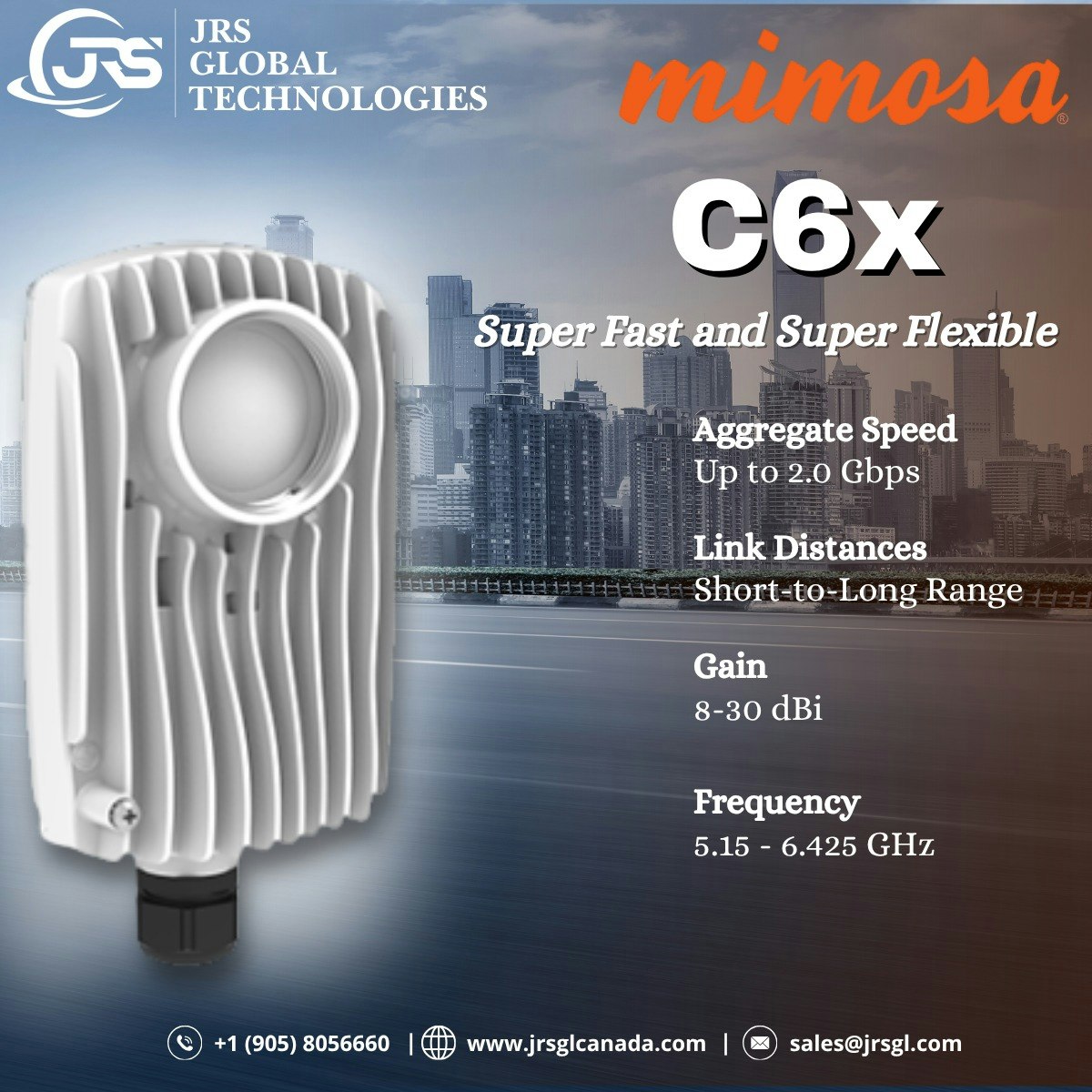
When planning a modern fixed wireless network, one of the most common questions WISPs and network integrators ask is: Should you upgrade to the Mimosa C6x or continue using traditional 5 GHz radios? While legacy 5 GHz outdoor radios have powered wireless broadband for years, newer platforms like the C6x Mimosa Wi-Fi 6E outdoor radio introduce significant improvements in speed, efficiency, and interference management.
Understanding the real differences helps operators choose the best outdoor wireless radio for WISP networks and future-proof their infrastructure.
Technology Foundation: Wi-Fi 6E vs Legacy 5 GHz
Traditional 5 GHz radios typically rely on older Wi-Fi standards and earlier TDMA implementations. While proven, these systems often struggle in dense deployments where spectrum congestion and client counts are high.
The Mimosa C6x Canada is built on Wi-Fi 6E and OFDMA technology, which dramatically improves how bandwidth is allocated across connected devices. Instead of serving clients one at a time in larger time slices, OFDMA allows simultaneous smaller data allocations. This results in lower latency, higher throughput, and better multi-user efficiency — especially important for high-density subscriber sectors.
Throughput and Capacity Differences
Most traditional 5 GHz radios deliver moderate throughput suitable for small sectors or short backhaul links. However, as subscriber demand grows with streaming, cloud apps, and VoIP, these radios can become bottlenecks.
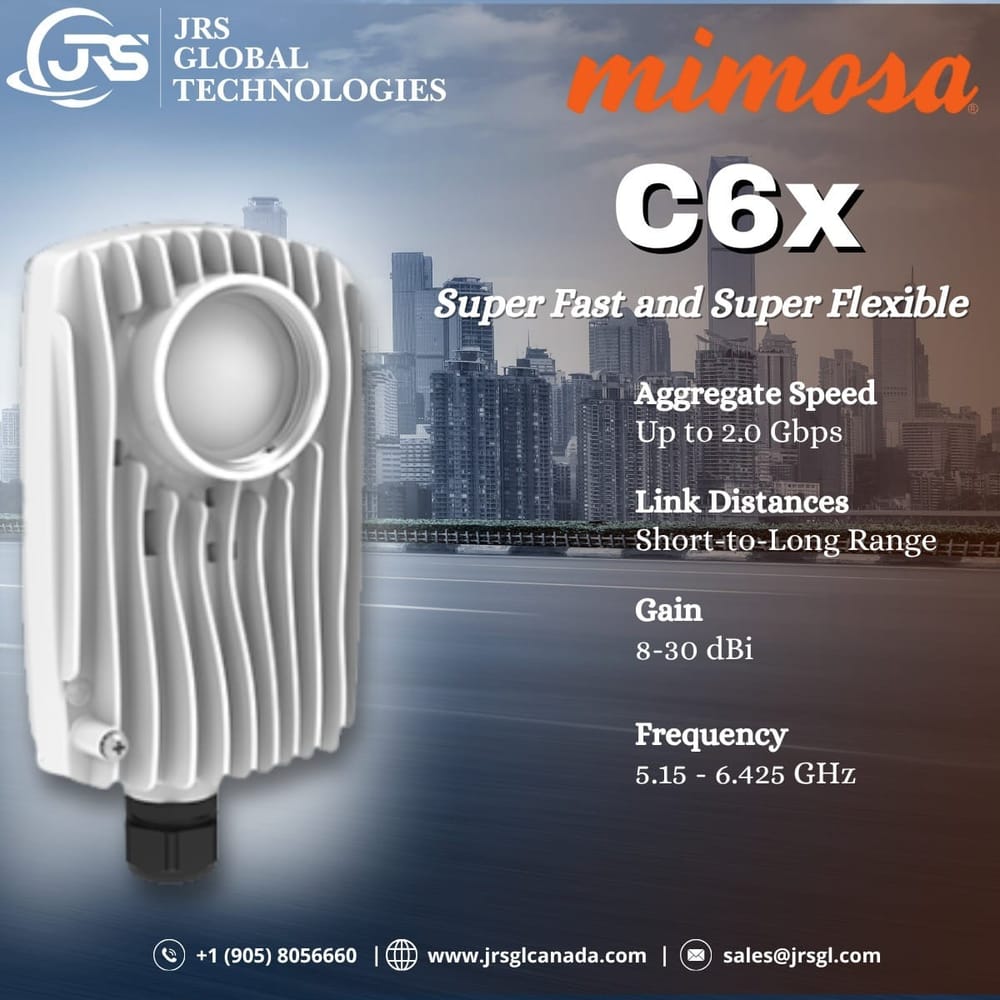
The Mimosa C6x high-performance radio supports much higher aggregate capacity and wider channel bandwidths. That means more subscribers per access point and higher per-user speeds. For operators scaling their networks, this translates into better ROI per tower sector and fewer upgrade cycles.
Interference Handling and Spectrum Efficiency
One of the biggest weaknesses of traditional 5 GHz wireless radios is performance degradation in noisy RF environments. Urban and suburban areas often have crowded channels, causing unstable links and fluctuating speeds.
The C6x includes advanced interference mitigation and intelligent spectrum management features. Its scheduling and filtering capabilities help maintain stable connections even when the spectrum is busy. For WISPs operating in congested markets, this can significantly improve uptime and customer satisfaction.
Antenna Flexibility and Deployment Model
Many older 5 GHz radios come with fixed integrated antennas. If coverage needs change, the entire unit often must be replaced.
It supports modular twist-on X-Series antennas, allowing operators to select different gain levels without changing the radio. This modular approach simplifies inventory and speeds up deployment design for point-to-point wireless links and point-to-multipoint sectors.
Future-Proofing Your WISP Network
Traditional 5 GHz radios still work, but they are no longer the optimal choice for growing, high-demand networks. Subscriber bandwidth usage continues to rise, and spectrum conditions are getting tighter.
Upgrading to the Mimosa C6x outdoor wireless radio gives WISPs access to newer protocol efficiency, higher client capacity, and better interference resilience. For operators focused on long-term scalability, performance consistency, and competitive service delivery, the C6x represents a clear step forward over legacy 5 GHz platforms.